
#1. Which chlorine species is primarily responsible for effective microbial inactivation?
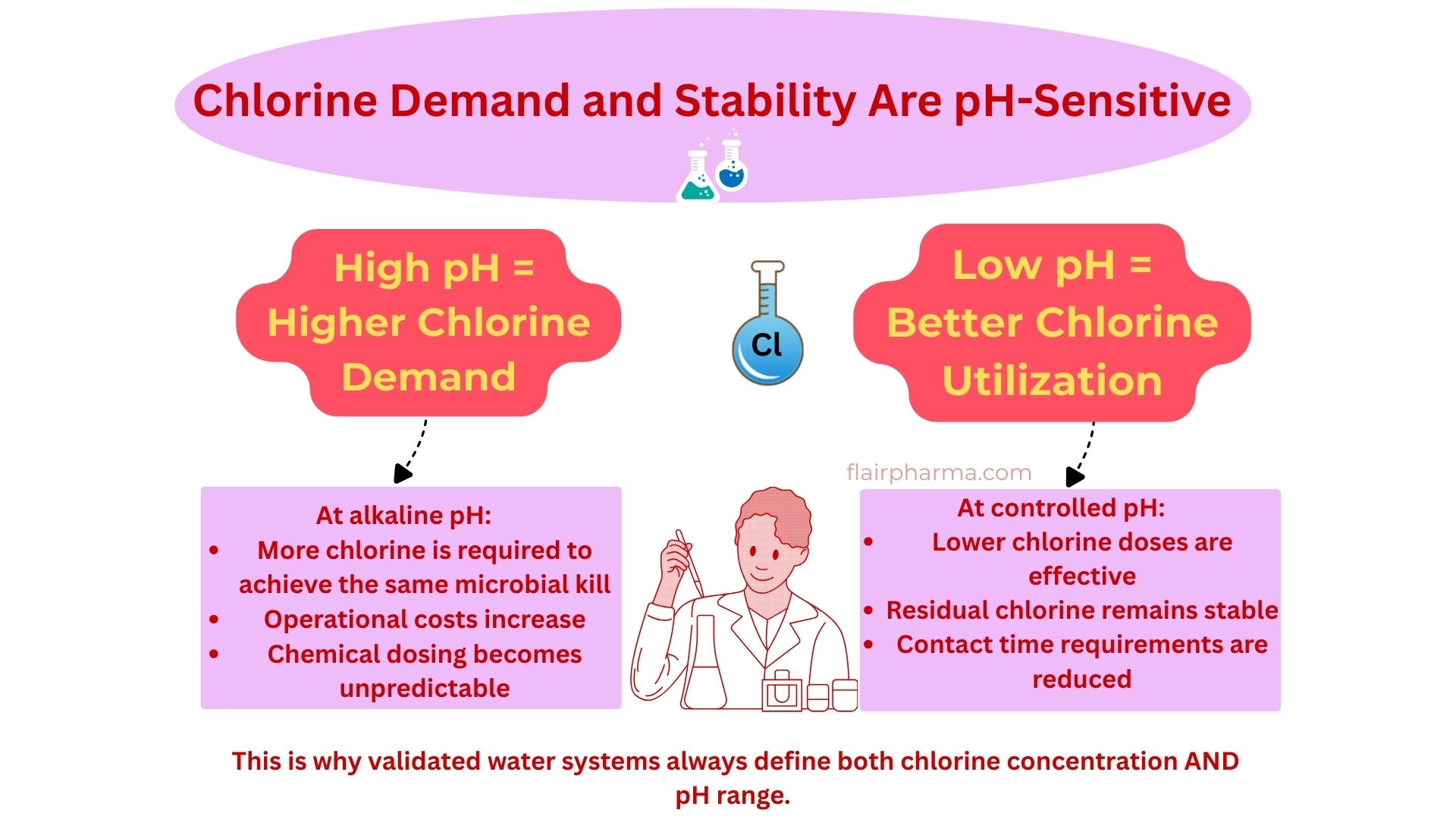
#2. pH control during chlorination is critical mainly because pH influences:
#3. At which pH range does hypochlorous acid dominate in water systems?
#4. Why is hypochlorite ion (OCl⁻) less effective than HOCl?
#5. What is the most likely outcome of chlorination at pH > 8.0?
#6. Which operational parameter must be monitored along with chlorine concentration?
#7. Increasing chlorine dose without adjusting pH mainly leads to:
#8. pH values below 6.0 during chlorination may cause:
#9. During an audit, pH records are missing for chlorination cycles. This indicates a deficiency in:
#10. An inspector asks why chlorine concentration alone is insufficient as a control parameter. The correct justification is:
#11. Validation data shows acceptable chlorine levels but recurring microbial excursions. The most probable root cause is:
#12. Which observation would raise a major GMP concern during system sanitization review?
#13. pH control is considered a Critical Process Parameter (CPP) because it:
#14. An auditor asks how pH control supports validation. The best response is:
#15. What type of evidence best demonstrates effective pH control during chlorination?
#16. If pH drifts outside the validated range during chlorination, what is the GMP-acceptable action?
#17. High pH leading to biofilm formation primarily indicates failure of:
#18. Which regulatory expectation does pH monitoring during chlorination directly support?
#19. An inspector asks why pH is monitored “only during chemical preparation” and not throughout chlorination. Which response would be considered scientifically acceptable?
#20. During a review of validation documentation, it is observed that pH acceptance criteria are mentioned in SOPs but not defined in the validation protocol. This gap primarily weakens:
#21. An unexpected rise in system pH occurs due to upstream RO membrane aging. Chlorination continues without deviation handling, as chlorine levels remain within limits. From an audit perspective, this situation represents:
#22. During routine chlorination, system pH is recorded at 8.3 (validated range: 6.5–7.5). Chlorine concentration remains within limit and no microbial failures are observed. Which deviation statement is most GMP-appropriate?
#23. Which of the following root cause statements would be considered unacceptable in a deviation related to pH drift during chlorination?
#24. Which impact assessment best aligns with GMP expectations for a pH excursion during chlorination?
#25. During deviation closure, which justification would most likely be rejected by an auditor?
#26. Which CAPA action is most appropriate for recurring pH excursions during chlorination?
#27. A deviation report includes the statement: “Deviation occurred due to human error.” What is the primary QA concern with this statement?
#28. When assessing product impact for a pH deviation, which statement is most defensible?
#29. An auditor reviews a deviation and notes absence of pH trend analysis. This most likely indicates failure in:
#30. Which deviation classification is most appropriate for repeated pH excursions affecting chlorination effectiveness?


