
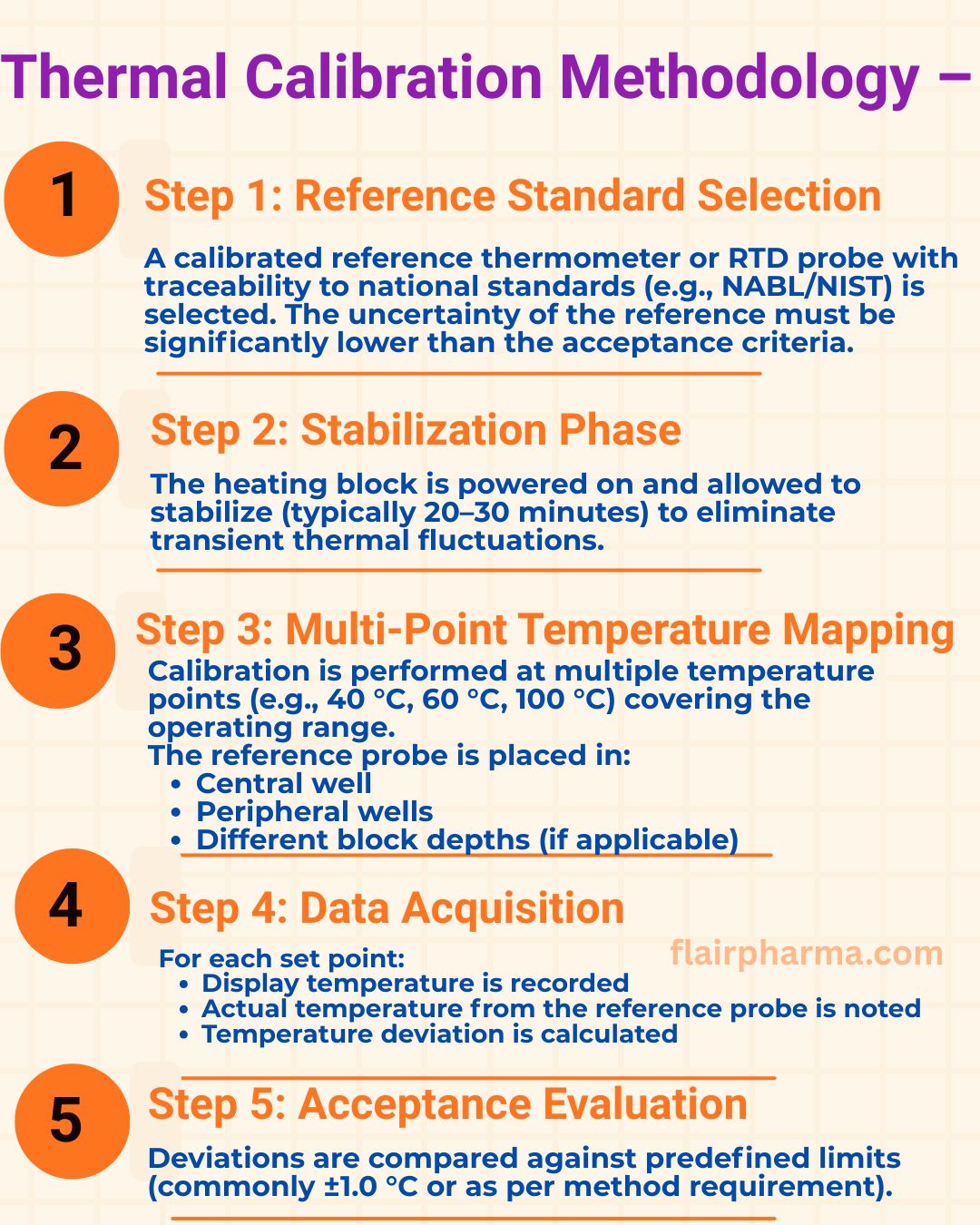
#1. A heating block is classified as controlled equipment primarily because it:
#2. Which document most directly supports the need for heating block calibration in pharmaceutical labs?
#3. Calibration of a heating block mainly confirms:
#4. What is the most appropriate reference instrument for heating block calibration?
#5. Why is stabilization time required before recording calibration readings?
#6. Which calibration approach best evaluates thermal uniformity?
#7. A heating block shows a deviation of +1.3 °C against an acceptance limit of ±1.0 °C. What is the correct action?
#8. Calibration frequency should be based on:
#9. Which factor most strongly affects calibration acceptance criteria?
#10. Why is traceability critical in heating block calibration?
#11. Using an expired reference thermometer for calibration will result in:
#12. Which document defines the calibration methodology?
#13. Heating block relocation within the same lab requires:
#14. What is the primary purpose of calibration labels on heating blocks?
#15. A heating block passes calibration but fails during routine use. What should be reviewed first?
#16. Which parameter ensures consistency of temperature readings?
#17. Adjustment during calibration is acceptable only if
#18. Failure to calibrate heating blocks may directly impact:
#19. Which activity demonstrates ongoing control between calibrations?
#20. What is the main risk of using generic acceptance criteria for all methods?
#21. Heating block calibration primarily supports which GMP principle?
#22. Which situation triggers an impact assessment?
#23. Calibration uncertainty should always be:
#24. Which role typically reviews calibration records?
#25. Heating blocks used for enzymatic reactions usually require:
#26. What best defines calibration failure trending?
#27. Which evidence best satisfies an auditor?
#28. Heating block qualification differs from calibration because qualification:
#29. An out-of-calibration heating block must be:
#30. From a regulatory perspective, heating block calibration is best described as:


